
So you have your new digital camera and clicking away to glory anything and everything in sight. Now you want to print them and you need the best photo printers to print your fantastic photos. Let us talk about the various printers in the market.


So you have your new digital camera and clicking away to glory anything and everything in sight. Now you want to print them and you need the best photo printers to print your fantastic photos. Let us talk about the various printers in the market.

The local dialects spoken by the people of Garhwal are terned as Garhwali or Gadwali dialects. Various variations of Garhwali can be seen at the different parts of Garhwali.
Almost all people who can speak and understand Garhwali can also speak and understand Hindi, one of the most commonly spoken languages of India. As per a study, Garhwali is only 50% intelligible for Hindi speakers and there is one-way full intelligibility of Hindi for Garhwali speakers because of the high rate of Hindi literacy in Uttarakhand and the popularity of Hindi in Northern India.
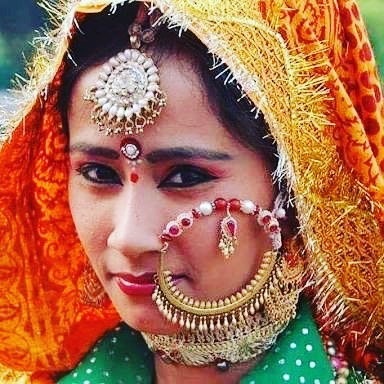
Getting married according to the Pahari traditions is a gift bestowed to few and if you are a Garhwali who live in the cities or abroad then you must have wanted to get married according to the Pahari traditions. But the sad part is that you are not aware of the traditional rituals performed during the wedding. But you don’t have to worry about it as we have collected some authentic information having all the information regarding the traditional Garhwali wedding ideas so have a look at it. When the parents find a suitable match for their girl the horoscope or the janam kundali is matched to know whether they can stay happily ever after or not.

One thing that every parent notice is that the stature and family values of the bride match with grooms family or not.
When the parents agree to their marriage an engagement ceremony is celebrated in which the bride and groom exchanges rings. Few close friends and relatives are invited to the function who pay back the favour by handing money to the couple which is considered to be auspicious.

Paharis are simple people they don’t like to show off so most of the families generally conduct the function at the groom’s home where food and drinks are served to the guests.
The most talked about thing in a Garhwali wedding is the beautiful traditional Tehri Nath also known as Nathuli. Either the bride’s parents or the groom’s mother sends the Tehri Nath to the bride.
During the mehndi ceremony, intricate henna designs are made on the hands of the bride and groom. The women sing and dance to the tunes of Garhwali music and give warm blessings to the couple.

The bride adorns a lehenga with some gold and silver jewellery to accentuate her look. The groom adorns a dhoti-kurta, sherwani or a formal suit in his wedding.
The groom who is saddled on a horse takes a grand procession called Baraat at the bride’s house. The family and friends of the groom sing, dance and make merry to celebrate the most important day of his life.

Loud music is played by the wedding band which moves with the baraat. All the baraatis or the friends and family of the groom are welcomed by the bride’s family members on their arrival.

After the baraat enters the house scrumptious Indian delicacies are served to them with love.
When all the guests leave the bride and groom then have dinner together along with their close companions.
After having dinner the bride and groom sit on the mandap to get tied in a knot.

The pundit recites chants and hymns and tell the bride and groom about their duties after marriage.
The bride and groom take feras or circle around the sacred fire to promise to stay together.
The groom puts vermilion (sindoor) on the bride’s forehead and adorns a mangal sutra around her neck.
After performing these rituals the bride and groom become husband and wife. The bride leaves her maternal home and leaves with the groom in a doli or palanquin.
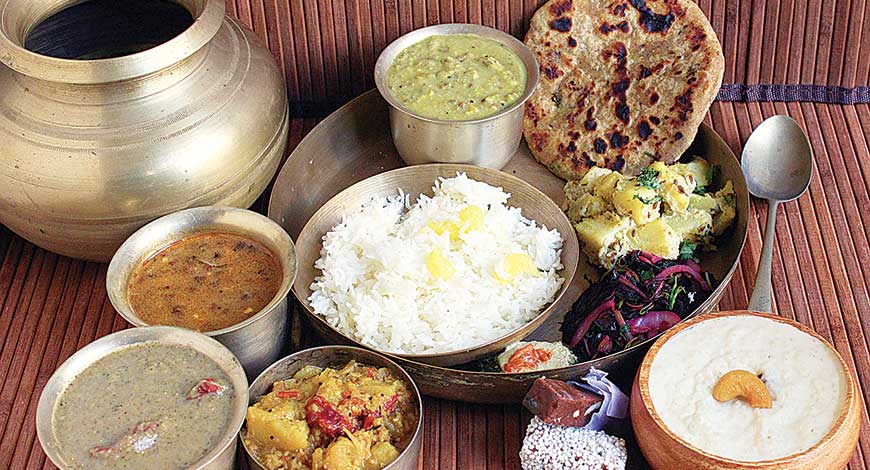
As you take the winding road up your favourite hill station in Uttarakhand, you are greeted with different aromas coming from the forests and the roadside eateries. And when you start to smell food close, I am sure your stomach starts to growl just like mine but instead of choosing anything native we settle for something which is known to us. Food, wherever you go makes an essential part of your trip and if we speak specifically of Uttarakhand, we might have to stop and think how much time we invested in trying out the local food instead of the sightseeing. The truth is, we may know the furthest destination in their state but most of us are unaware what these beautiful red-cheek people eat! So, for the love of Uttarakhand, let me take you on a small journey through the cuisine of this state, which is as lovely as its destinations and as simple as its people.
Bhang Ki Chutney
Now this one is a real scene stealer when it comes to enhancing the taste of the cuisine of Uttarakhand. The fresh aroma and the tangy tamarind taste can stay on your tongue for quite a long time. Made from Hemp Seeds that has an irresistible aroma; cumin seeds, garlic leaves; tamarind and salt, this simple chutney compliments any dish made in Uttarakhand.
Aalu Ka Jhol
Here is an all time favourite for the people of Uttarakhand and you ask why, because it is simple to make and scrumptious to savour. The entire preparation takes less than 15 minutes, so it is one of those dishes that one can abide by when either too tired or lazy to cook. Just boil some potatoes, prepare a simple onion and tomato curry and leave the potatoes in it to cook over slow fire and the result is well…surprising!
Kafuli
It is a dish that almost all Pahadis swear by in Uttarakhand. Well, if you ask me, I can have this every single day without complaining…it is that exotic! Made from spinach and fenugreek leafs and cooked in an iron kadhai, kafuli is complimented by hot steaming rice. The gravy for this dish is prepared by adding rice or wheat flour paste along with water. The taste is further enhanced by slow fire cooking. I am sure Popeye too would have loved this recipe!
Arsa
Those with sweet tooth are going to love this. Well, honestly this can be the Pahadi version of Pua (another sweet item made in many North Indian states). What makes Arsa different from Pua is the use of jaggery and curd in it. Once prepared these soft round balls can be munched during tea time or as a dessert after meals. These sweet balls seem to melt in mouth and the flavour of jaggery and curd is so prominent that once eaten, you wouldn’t forget the taste for long.
Jhangora
Our Garhwal kitchen has a preparation for you too and it is called Jhangore ki Kheer. Jhangora is type of millet and is the main ingredient of this dessert item. This sweet dish of Uttarakhand has the goodness of milk, cashews and raisins. This particular dessert is known for its rich texture and a taste that one cannot easily forget. High in nutrients and taste this is a must try after a heavy course of Garhwali cuisine
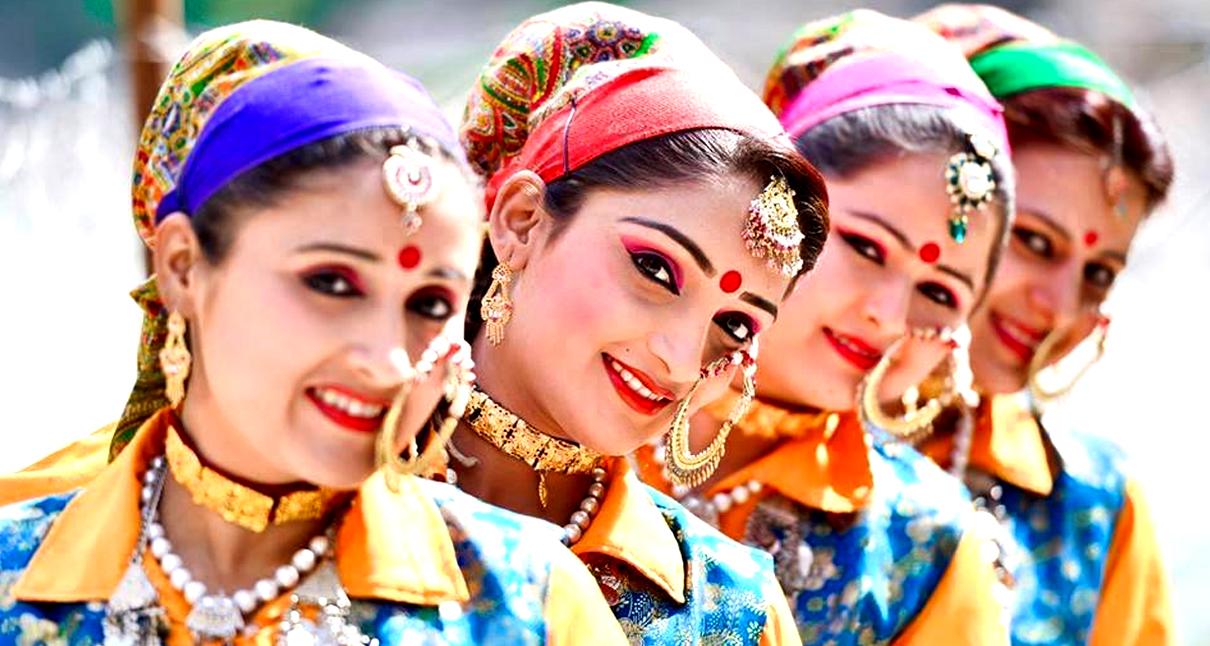
Our Traditional Culture - Dress
Uttarakhand or better known among the natives as Uttaranchal is famous across India for its holy places. This Devbhoomi (Land of Gods) is situated in the mountainous region of the Himalayas and is also a popular tourist destination.
Uttarakhand is home to Garhwalis and Kumaonis depending on which part of Uttarakhand they belong to. It has a rich culture of which, music and dance are an integral part. Various languages are spoken here like Garhwali, Kumaoni, Bhoti and even Hindi. Silver and gold jewellery is a significant part of traditional Uttarakhand attire. If you visit Uttarakhand, you will find women wearing gold kundal (earrings) and often having multiple piercings in their ears. Uttarakhand inhabits people from different ethnic backgrounds like Rajputs, Brahmins and tribal population like Tharu, Jaunsari, Bhotia, among others. Therefore the traditional attires do have a lot of variation.
Women's traditional
In the Garhwal region of this Northern state, women usually wear sari tied in a particular way, the pallu going from the front and knotted on the shoulder, with a waistband made of cloth. This is considered convenient for women, as it makes it easier to carry food and does not interfere with their work on the fields. Earlier, the sari was worn with a full sleeves Angra (blouse) with buttons made from silver, to protect the women from the cold. They also don a headscarf scarf to protect their hair from damage and to carry the harvest.

A married woman was supposed to wear hansuli (silver ornament) worn around the neck, guloband (resembles the contemporary choker), black beads and silver necklace called chareu, silver payal, silver necklace, silver dhagula (bracelet) and bichuye (toe rings). Sindoor along with bindi was also mandatory for a married woman. Even today, a Gulaband is a distinct feature of a married woman. It is designed on a maroon or blue band with gold square pieces arranged on it.
Men's traditional
Garhwali men usually wear kurta and pyjama or kurta and churidar, depending on their age. This is the most common attire in the community. This is paired with a topi by the young or pagadi by the older men to protect themselves from the cold. A lot of men also started wearing suits after the influence of the British. The fabric used for clothes differs according to the region's weather conditions, wool in colder regions and cotton in warmer regions.

During weddings, a yellow coloured dhoti and kurta are still the preferred attire for the groom.
Men used to travel distances on foot, and as a way to protect themselves from theft, they carried their silver coins inside a pouch which was tied around their waist. This was hidden from view as it was worn inside their clothes.
Traditional of the Kumaon Community
Women's traditional
The women in the Kumaon region of Uttarakhand can usually be found wearing a ghagra along with a kameez (shirt) as a blouse. This closely resembles the attire worn by many Rajasthani women. Kumaoni women also wear pichoras, a type of garment common during weddings and ceremonies. Traditionally this was dyed and made at home and was yellow. Even today, women don this traditional pichora on their wedding day.
A woman in the Pithoragarh district of Kumaon region
In Kumaon region, married women wear big naths made from gold covering their entire cheek, hansuli, black beaded necklace or chareu, bichuye (toe rings) made from silver, and sindoor. These were considered mandatory.
A woman adorned in the traditional jewellery (Pithoragarh)
Men's traditional
The regular clothes of the men of Kumaon region resemble that of Garhwali. They too wear kurta and pyjama along with a turban or topi. However, they can be found wearing jewellery on their necks or hands. Something which is specific to the Kumaon region.